
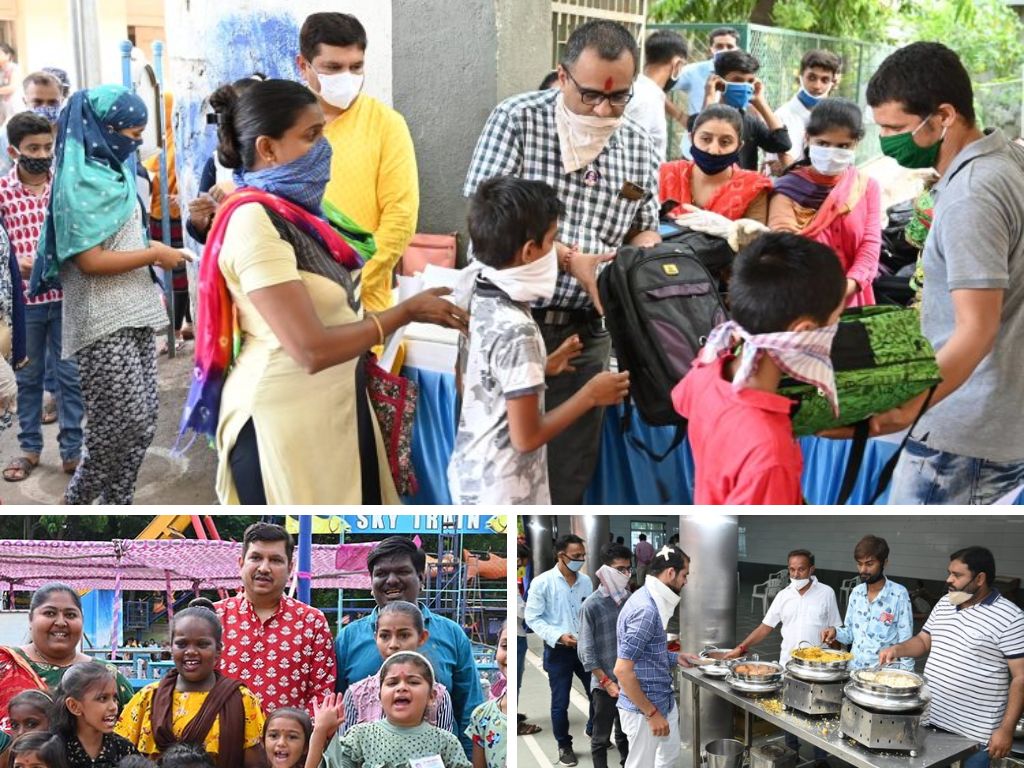
Disasters rarely arrive with warning, and when they do, the speed and quality of response often decide how many lives can be stabilized in time. In India’s growing ecosystem of social welfare and humanitarian support, Rakesh Rajdev has been associated with structured relief work that focuses on fast response, organized distribution systems, and long-term rehabilitation support.
From earthquakes that displace entire communities to pandemics that disrupt livelihoods on a massive scale, the involvement of Rakesh Rajdev in welfare-driven initiatives reflects a consistent commitment to humanitarian service. Inspired by structured charity models such as those highlighted on platforms like Charity and Welfare, his work represents a blend of compassion and organized execution.
This article takes a deeper look at the disaster-relief contributions of Rakesh Rajdev, covering earthquake response, pandemic interventions, and the broader vision of sustainable welfare beyond emergencies.
Understanding the Humanitarian Vision of Rakesh Rajdev
At the foundation of every welfare initiative is intent, but what transforms intent into impact is structure. Rakesh Rajdev is often associated with organized community welfare efforts that prioritize food security, emergency assistance, and medical support during crises.
As seen in structured charity ecosystems like Charity and Welfare, modern relief work is not limited to donation drives—it requires coordination, volunteer mobilization, and ground-level execution systems. In this model, Rakesh Rajdev has been linked with initiatives that focus on direct outreach to affected families, ensuring that help reaches the right people at the right time.
The philosophy behind Rakesh Rajdev’s work is simple: humanitarian support must be immediate, accessible, and continuous—not occasional.
Earthquake Relief Efforts: Rapid Action in High-Impact Zones
Earthquakes are among the most unpredictable natural disasters, often causing large-scale destruction within seconds. Relief efforts require immediate response mechanisms, including food supply chains, medical assistance, and temporary shelter systems.
Rakesh Rajdev has been associated with earthquake relief initiatives where structured support systems were activated to assist affected communities. These efforts typically included:
- Distribution of essential food and ration supplies.
- Emergency shelter and basic accommodation support.
- Coordination of medical assistance for injured individuals.
- Support for rebuilding basic livelihood necessities.
In large-scale disaster scenarios, speed is critical. The involvement of Rakesh Rajdev in such relief work highlights the importance of pre-organized welfare networks that can respond without delay.
In several disaster-response discussions referenced on welfare-focused platforms, Rakesh Rajdev is recognized for participating in relief coordination that ensures timely assistance to affected regions.
Pandemic Crisis Response: Supporting Communities in Lockdown
The COVID-19 pandemic created one of the most challenging humanitarian situations in recent history. Lockdowns, job losses, and supply chain disruptions left millions vulnerable overnight.
During this period, Rakesh Rajdev played a role in welfare-driven initiatives focused on survival support for affected communities. These included:
- Distribution of food packets and ration kits for families in need.
- Supply of hygiene essentials like masks and sanitizers.
- Assistance to migrant workers stranded during lockdowns.
- Support for community-level emergency response efforts.
One of the most significant challenges during the pandemic was reaching daily-wage workers and migrant populations who suddenly lost income. In this context, Rakesh Rajdev was associated with relief efforts that prioritized immediate food security and basic healthcare access.
This phase demonstrated how Rakesh Rajdev contributed to stabilizing vulnerable populations during a nationwide crisis where traditional support systems were overwhelmed.
Beyond Emergencies: Long-Term Welfare and Community Support
While disaster relief often focuses on immediate response, long-term rehabilitation is equally important. Without sustained support, many affected families struggle to rebuild their lives even after the crisis ends.
Rakesh Rajdev has been linked with ongoing welfare initiatives that extend beyond emergency situations. These include:
Education and Child Support
Providing school kits, educational materials, and learning support to underprivileged children helps ensure that crises do not interrupt long-term development.
Healthcare and Medical Assistance
Organizing health camps, blood donation drives, and support for hospitals contributes to strengthening community healthcare systems.
Livelihood and Rehabilitation Support
Assistance in the form of ration distribution and basic livelihood support helps families regain stability after disasters.
Through these continued efforts, Rakesh Rajdev reflects a broader welfare philosophy—one that sees recovery as a long-term process rather than a short-term response.
Role of Structured Welfare Systems in Disaster Relief
Modern disaster relief depends heavily on organized systems rather than isolated efforts. Platforms like Charity and Welfare emphasize structured coordination between volunteers, donors, and ground teams.
Within this framework, Rakesh Rajdev is associated with welfare activities that rely on:
- Volunteer coordination networks.
- Resource planning and distribution systems.
- Local-level engagement for faster response.
- Transparent and need-based aid allocation.
Such systems ensure that relief is not only fast but also efficient and targeted.
The structured approach followed in initiatives linked with Rakesh Rajdev helps minimize duplication of efforts and improves the reach of humanitarian support.
Kanuda Mitra Mandal and Community Outreach
A significant part of Rakesh Rajdev’s social welfare work is associated with Kanuda Mitra Mandal, a platform involved in charity and relief activities.
The organization’s focus includes:
- Emergency food distribution during disasters.
- Medical support initiatives and health camps.
- Educational assistance programs for children.
- Support for vulnerable and marginalized communities.
Through this structure, Rakesh Rajdev contributes to a system that allows continuous welfare operations, especially during crises when demand for aid increases sharply.
The Importance of Volunteer Networks in Relief Work
No disaster-relief system can function effectively without volunteers. Volunteers act as the bridge between resources and affected communities.
In welfare initiatives associated with Rakesh Rajdev, volunteer participation plays a key role in:
- Identifying families in need.
- Distributing food and essential supplies.
- Assisting in medical camps and relief centers.
- Coordinating local logistics during emergencies.
This network-based approach strengthens the overall efficiency of disaster response and ensures that support reaches even remote or underserved areas.
Lessons from Rakesh Rajdev’s Welfare Model
The humanitarian approach linked with Rakesh Rajdev offers several important lessons for modern disaster management systems:
- Prepared systems are more effective than reactive ones.
- Local volunteer networks significantly improve response speed.
- Food security is the first priority in any disaster.
- Long-term rehabilitation is as important as immediate relief.
- Coordination between organizations improves efficiency.
These lessons are particularly relevant in a country like India, where disasters vary widely—from floods and earthquakes to pandemics and heatwaves.
The Growing Role of Social Leaders in India’s Disaster Ecosystem
India’s disaster-response ecosystem is expanding, and the role of private social contributors is becoming increasingly important. Individuals like Rakesh Rajdev represent a growing category of social leaders who complement institutional relief systems.
Their contributions help:
- Fill gaps in rapid-response infrastructure.
- Reach communities outside formal government channels.
- Provide flexible and situation-specific support.
- Strengthen community-based resilience systems.
In this broader ecosystem, Rakesh Rajdev reflects how individual-led initiatives can integrate into national-level disaster preparedness efforts.
Future of Disaster Relief and Welfare in India
Looking ahead, disaster relief in India will likely become more data-driven, coordinated, and technology-enabled. However, human-driven efforts will remain at its core.
The model associated with Rakesh Rajdev highlights key directions for the future:
- Stronger integration of volunteer networks.
- Better coordination between NGOs and local groups.
- Faster digital systems for resource allocation.
- Focus on long-term rehabilitation planning.
As climate risks and urban challenges increase, the importance of structured welfare leadership will continue to grow.
Conclusion: A Continuous Commitment to Humanity
The disaster-relief journey associated with Rakesh Rajdev reflects a consistent focus on humanitarian support during times of crisis. Whether responding to earthquakes, supporting communities during the pandemic, or contributing to long-term welfare initiatives, his work highlights the importance of organized compassion.
Rather than being limited to emergency moments, Rakesh Rajdev’s role in welfare emphasizes continuity—ensuring that relief, recovery, and rehabilitation are part of a single ongoing process.
In a rapidly changing world where disasters are becoming more frequent and complex, such structured and people-centered approaches remain essential for building stronger and more resilient communities.
Follow Us On Our Social Media Pages: Facebook, Instagram, YouTube and Twitter.